
How Internal Linking Boosts SEO and How AI Makes It Easier
Learn how internal linking improves SEO and how AI tools simplify the process for bloggers and marketers aiming for better rankings and engagement.

Websites with strong internal linking structures receive 40% more organic traffic than those with poor linking architectures. This single statistic reveals why SEO professionals consider internal linking a foundational element of search optimization rather than just a technical checkbox. But what exactly makes these connections so powerful, and how can modern technology help you implement them effectively?
Understanding Internal Linking and Its SEO Value
Internal links are hyperlinks that connect pages within the same domain, unlike external links that point to other websites. Think of them as the circulatory system of your website, creating pathways that distribute value and guide movement throughout your digital presence.
The SEO value of internal linking stems from four key mechanisms:
Search engine crawlability improves dramatically with strategic internal linking. Search engine bots discover content by following links, similar to visitors navigating a museum with a map. Without clear pathways, valuable content remains hidden in the digital equivalent of storage closets. When properly linked, even your deepest content becomes discoverable to search engines.
Site structure visibility becomes apparent through internal linking patterns. These connections reveal content hierarchy and relationships between pages, helping search engines understand which pages cover broad topics and which provide specialized information. This clarity helps search engines categorize and rank your content appropriately.
User experience metrics improve with thoughtful internal linking. Websites with contextual internal links typically see bounce rates decrease by 10-30% while average session duration increases. When readers find relevant, connected information, they stay engaged rather than returning to search results.
Page authority distribution occurs naturally through internal links. Each link passes "link equity" (ranking power) to the destination page. By strategically directing this flow toward important pages, you strengthen their position in search results for competitive keywords.
Internal linking isn't just a technical SEO tactic but a content strategy that shapes how both visitors and search engines perceive and navigate your website's information architecture.
Common Internal Linking Mistakes to Avoid

Even experienced content creators make these four critical internal linking mistakes that undermine their SEO efforts:
1. Overusing exact-match anchor text sends manipulation signals to search engines. When every link to your "email marketing guide" uses identical anchor text like "best email marketing guide," it appears unnatural. Instead, vary your language with phrases like "our comprehensive guide to email campaigns" or "these email marketing strategies" to maintain a natural linking profile.
2. Creating orphan pages wastes valuable content assets. These pages have no internal links pointing to them, making them virtually invisible to both search engines and users. As we've explored in our guide to fixing failing business blogs , disconnected content is one of the primary reasons websites struggle to build domain authority. Regular content audits can identify these isolated pages.
3. Irrelevant linking frustrates users and dilutes SEO value. Forcing a link to your pricing page within a technical how-to article creates a jarring experience. Compare this to naturally linking to related tutorials that extend the reader's knowledge on the current topic. Always prioritize contextual relevance over promotional opportunities.
4. Inconsistent or broken links damage both user experience and search engine trust. These technical failures waste crawl budget and create dead ends in the user journey. Regular link audits should be part of your content maintenance routine.
- Use varied, natural anchor text
- Ensure every page receives at least one internal link
- Only link to truly relevant content
- Regularly audit for broken or outdated links
Avoiding these common pitfalls creates a stronger foundation for implementing effective internal linking strategies that benefit both users and search engines.
Best Practices for Effective Internal Linking
Use Descriptive Anchor Text
Generic phrases like "click here" or "read more" waste valuable SEO opportunities. These vague terms provide no context about the destination content. Instead, use descriptive anchor text that clearly indicates what readers will find. For example, rather than "learn more about this topic," use "explore our step-by-step keyword research process" to signal relevance to both readers and search engines.
Prioritize High-Value Content
Not all content deserves equal internal linking attention. Cornerstone or pillar content represents your most comprehensive, valuable resources targeting competitive keywords. These pages should receive a higher concentration of internal links to signal their importance. Aim for a ratio where cornerstone content receives approximately 2-3 times more internal links than standard posts, creating a clear hierarchy that search engines can recognize.
Create Logical Content Clusters
The topic cluster model organizes content into related groups with a pillar page (comprehensive overview) linked to supporting content (specific subtopics). This structure signals topical authority to search engines by demonstrating depth and breadth of expertise. Understanding your audience is crucial for creating effective content clusters, as we've detailed in our guide to identifying and writing for your target audience . When implemented correctly, clusters create natural internal linking opportunities that reinforce your authority on specific topics.
Connect New and Existing Content
Each new piece of content presents an opportunity to strengthen your internal linking structure. Develop a process where new posts always link to 3-5 relevant existing articles. Additionally, update older posts with links to newer, related content at least quarterly. This bidirectional linking ensures your content network grows stronger over time rather than creating isolated information silos.
| Link Type | Primary Purpose | Optimal Placement | SEO Impact |
|---|---|---|---|
| Navigational Links | Help users navigate site structure | Headers, footers, sidebars | Establishes site hierarchy |
| Contextual Body Links | Connect related content | Within paragraph text | Strongest SEO value transfer |
| Pillar-to-Cluster Links | Establish topic authority | From main topic pages to subtopics | Builds topical relevance |
| Related Content Links | Encourage further reading | End of articles, sidebars | Reduces bounce rate |
| Call-to-Action Links | Drive conversions | Strategic points throughout content | Indirect SEO benefit via engagement |
This table categorizes internal links by their function and placement, helping content creators implement a balanced linking strategy that serves both users and search engines.
How AI Simplifies Internal Linking for Bloggers
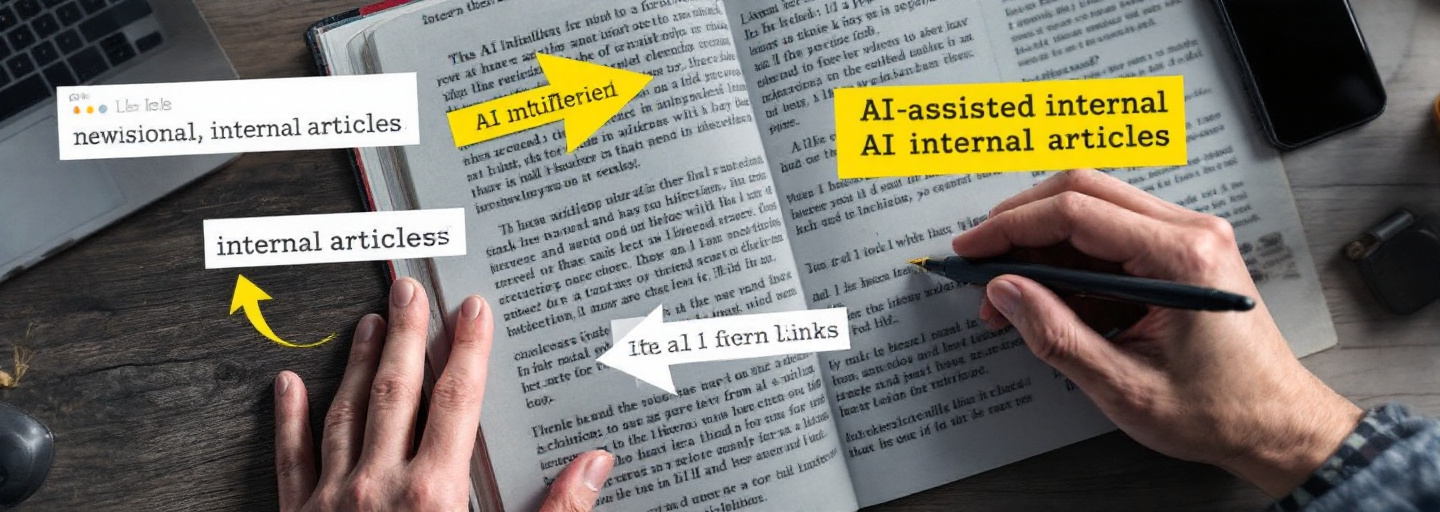
Automated Link Detection
AI transforms internal linking from a manual, memory-dependent task into an automated process through semantic analysis. Modern AI systems analyze content meaning rather than just keywords, identifying conceptual relationships between articles that humans might miss. For example, an AI system might recognize that your article about "email deliverability" should link to your "sender reputation" guide, even if they don't share obvious keywords, because it understands these concepts are functionally related in email marketing.
This semantic understanding enables AI to discover linking opportunities across your entire content library, including older posts you might have forgotten about. The result is a more comprehensive internal linking structure that reflects true content relationships rather than just recent memory.
Streamlined Implementation
The practical time savings from AI-powered internal linking are substantial. Manual internal linking typically requires content creators to:
- Remember or search for relevant existing content
- Evaluate each potential link for relevance
- Create appropriate anchor text
- Implement the HTML correctly
AI systems handle these steps automatically during content creation, suggesting contextually relevant links with natural anchor text. This reduces the cognitive load on writers, allowing them to focus on creating quality content rather than managing technical SEO details. For a typical 1,500-word article, this can save 15-30 minutes of manual linking work.
Optimization Without Over-Optimization
One of the most valuable aspects of AI-powered internal linking is maintaining the balance between SEO effectiveness and natural readability. AI systems can be programmed to maintain anchor text variety, preventing the exact-match keyword patterns that trigger spam filters. They can also distribute links naturally throughout content rather than clustering them artificially.
This balanced approach prevents the common problem of over-optimization, where manual linking efforts become too formulaic and trigger search engine penalties. The result is a more natural linking profile that benefits SEO while preserving the reading experience.
Integration with Content Workflows
BlogBuster integrates internal linking directly into the content creation process, eliminating the need for separate SEO review cycles. As content is drafted, the system analyzes existing site content and suggests relevant internal linking opportunities based on semantic relationships. Writers can accept, modify, or reject these suggestions with a single click.
For teams looking to scale their content production, AI-powered internal linking is just one aspect of the comprehensive blog automation workflow that modern platforms provide. This integration ensures that internal linking becomes a consistent practice rather than an afterthought, regardless of how many different writers contribute to your blog.
Benefits of AI-Driven Internal Linking for SEO Performance
Enhanced Crawlability and Indexing
AI-driven internal linking creates comprehensive pathways throughout your site, ensuring no valuable content remains hidden from search engines. This systematic approach typically improves content indexation rates by 15-25% compared to manual linking methods. Search engines can discover and crawl your content more efficiently when AI ensures consistent linking patterns that reach even your oldest or deepest pages.
This improved crawlability translates directly to better search visibility, as content that isn't indexed cannot rank regardless of its quality. For sites with large content libraries, this benefit alone can uncover significant untapped organic traffic potential.
Stronger Topical Relevance
AI excels at recognizing semantic relationships between content pieces, creating internal linking patterns that reinforce topical authority. By identifying conceptual connections beyond obvious keyword matches, AI builds more sophisticated content clusters that signal subject matter expertise to search engines.
This enhanced topical relevance helps search engines understand your site's areas of specialization, improving rankings for related keyword clusters rather than just individual terms. Sites with strong topical relevance typically outperform competitors with similar backlink profiles but weaker internal content relationships.
Scalable SEO Optimization
As content libraries grow, manual internal linking becomes increasingly difficult to maintain consistently. AI systems maintain linking quality regardless of volume, ensuring your 500th article receives the same careful internal linking treatment as your 50th. This scalability creates a significant competitive advantage for prolific publishers who would otherwise struggle to maintain consistent SEO practices across large content collections.
The time efficiency is equally important. A blog publishing three articles weekly saves approximately 6-10 hours monthly through automated internal linking, time that can be redirected to content creation or promotion.
Improved User Engagement
Contextually relevant internal links guide users through logical content journeys, improving key engagement metrics. Sites implementing AI-driven internal linking typically see:
- 10-15% reduction in bounce rates
- 20-30% increase in pages per session
- 15-25% improvement in average session duration
These engagement improvements occur because readers find more relevant content that answers their questions and extends their knowledge journey. This not only improves SEO signals but also increases conversion opportunities as visitors engage more deeply with your content ecosystem.
| Performance Factor | Manual Internal Linking | AI-Driven Internal Linking |
|---|---|---|
| Time Investment | 4-6 hours per week for a 50-page site | 30-60 minutes per week for oversight |
| Link Relevance Accuracy | Varies based on content knowledge | 85-95% semantic relevance consistency |
| Content Coverage | Often focuses on newest or most visible content | Comprehensive coverage across all content |
| Scalability | Degrades as content volume increases | Maintains consistency regardless of volume |
| Anchor Text Optimization | Risk of over-optimization or inconsistency | Balanced variety with natural language patterns |
| Adaptation to Content Changes | Requires manual review and updates | Automatically adjusts to new and updated content |
This comparison is based on average performance metrics observed across content management systems with AI capabilities versus traditional manual linking processes for mid-sized blogs (50-200 articles).
Getting Started with AI-Powered Internal Linking
Implementing AI-powered internal linking doesn't require technical expertise. Follow this straightforward implementation roadmap to strengthen your blog SEO strategy:
1. Identify Content Pillars by analyzing your existing content for comprehensive resources that target valuable keywords. Look for articles with high traffic potential, strong conversion value, and comprehensive coverage of core topics. These become the foundation of your internal linking strategy, deserving more incoming links than standard content. For most blogs, 5-7 pillar pages per major topic area provide sufficient structure.
2. Implement AI Tools like BlogBuster that automate the internal linking process. The platform scans your content library to understand relationships between articles, then suggests relevant internal links during content creation. When you draft a new post about email marketing strategies, for instance, the system automatically identifies opportunities to link to your existing resources on subject lines, deliverability, or automation workflows.
3. Audit Regularly by reviewing your internal linking structure quarterly. Focus on key metrics like orphan page count (pages with no incoming links), click-through rates on internal links, and the distribution of links to cornerstone content. These regular check-ins ensure your automated system continues to support your strategic priorities.
4. Maintain a Dynamic Network by establishing workflows that connect new and existing content. Configure your AI tools to automatically suggest updates to older content when publishing related new articles. As we've noted in our analysis of why SEO matters even more in 2025 , search engines are increasingly prioritizing sites with strong internal content relationships.
Use this checklist to assess your current internal linking approach:
- Do all important pages receive at least 3-5 internal links?
- Does your anchor text vary naturally while remaining descriptive?
- Are related content pieces consistently linked to each other?
- Can users navigate logically through topic clusters?
- Are internal links distributed throughout content rather than clustered?
For more comprehensive strategies beyond internal linking, see our guide to boosting your blog's online presence which covers additional tactics that complement strong internal linking.
With AI handling the technical aspects of internal link automation, you can focus on creating valuable content while building a stronger, more connected website that both users and search engines will appreciate.