
How to Use AI Tools to Streamline Keyword Research
Learn how AI tools simplify keyword research by automating discovery, clustering, and prioritization for better SEO and content planning.

Why Keyword Research Still Matters in 2025
Over 8.5 billion searches happen on Google every day, with 68% of online experiences beginning with a search engine. Despite advances in search technology, the fundamental connection between what people search for and what they find remains keyword-driven.
Keywords serve as the critical bridge between user intent and content discovery. While search algorithms have grown remarkably sophisticated at understanding context and meaning, they still rely on textual analysis to match queries with relevant content. The difference lies in how these algorithms now recognize semantic relationships rather than exact matches.
Strategic keyword implementation directly impacts where your content appears. Content optimized with well-researched keywords is 3.5 times more likely to appear in featured snippets, knowledge panels, and voice search results than content created without keyword planning. When a local bakery optimized their content around "gluten-free sourdough recipe," they captured a featured snippet that drove 43% more organic traffic to their site.
The measurable impact of keyword research speaks for itself. A recent case study of e-commerce product pages showed those with strategically researched keywords achieved click-through rates 27% higher than similar pages without keyword optimization. More importantly, visitors who arrived through optimized keywords spent an average of 2.3 minutes longer on site and converted at nearly double the rate.
Common Challenges in Traditional Keyword Research

The average content marketer spends 6-8 hours per week on keyword research alone. This process typically involves juggling multiple tools, exporting CSV files, cleaning data in spreadsheets, and manually consolidating information from disparate sources. For a small team producing just 4-5 content pieces monthly, this translates to nearly 40 hours of research time that could be spent on actual content creation.
Beyond the time sink, manual keyword research suffers from significant accuracy limitations. Human researchers naturally gravitate toward obvious, high-volume terms while missing valuable long-tail opportunities. When analyzing a topic like "home office setup," traditional research might identify 15-20 primary keywords, while overlooking hundreds of specific queries like "ergonomic setup for small apartment desk" or "home office lighting for video calls" that collectively represent substantial traffic potential.
The sporadic nature of manual keyword research creates strategic inconsistencies across content. Without a systematic approach, content teams often develop tunnel vision, focusing on isolated keywords rather than comprehensive topic coverage. This leads to frustrating content gaps where valuable subtopics remain unaddressed, or worse, keyword cannibalization where multiple articles compete for the same search terms, effectively diluting your site's authority on the topic.
You've likely experienced the frustration of spending hours researching keywords only to discover months later that you missed crucial terms your audience actually uses. Or perhaps you've created content around keywords that seemed promising but delivered minimal traffic despite your best efforts. These common experiences highlight why traditional keyword research methods are increasingly insufficient in today's complex search environment.
How AI Enhances Keyword Discovery
Pattern Recognition in Search Data
AI algorithms excel at processing vast datasets to identify patterns invisible to human researchers. While traditional tools might show you current search volumes, AI-powered keyword research tools analyze historical search data to predict which terms are gaining momentum. For instance, when analyzing fitness equipment keywords, an AI system might notice early growth patterns in searches for "compact rowing machines" months before this trend becomes obvious in standard keyword tools.
These pattern recognition capabilities extend beyond simple trend identification. AI systems can correlate search behavior with seasonal factors, news events, and even economic indicators to provide context for keyword fluctuations. This helps content creators distinguish between temporary spikes and sustainable growth opportunities worth targeting.
Natural Language Processing for Intent
Modern AI for blogging leverages sophisticated Natural Language Processing (NLP) to understand the meaning and intent behind searches rather than just matching keywords. This semantic understanding helps identify the full spectrum of terms related to your topic, including questions, concerns, and adjacent interests your audience might have.
- Identifies question variations people actually ask about your topic, capturing the conversational nature of modern searches
- Recognizes synonyms and related concepts that traditional tools treat as separate entities
- Understands contextual meaning to differentiate between similar terms with different intent (like "apple pie recipe" vs. "apple pie near me")
- Suggests semantically related terms that improve content comprehensiveness and topical authority
This intent-focused approach aligns perfectly with identifying and writing for your target audience, ensuring your keyword strategy addresses real user needs rather than just chasing search volume.
Real-Time Trend Identification
Perhaps the most valuable advantage of AI in keyword discovery is its ability to identify emerging search patterns in real-time. Traditional keyword tools typically operate on data that's weeks or even months old, but automated SEO tools with AI capabilities can analyze fresh search data to spot rising topics before they peak.
This early trend identification creates a significant competitive advantage. When a finance blogger used AI to identify growing interest in "inflation-protected investment strategies" early in the economic cycle, they published comprehensive content weeks before competitors, establishing topical authority that continued to drive traffic even as the topic became more competitive.
Using AI to Cluster and Prioritize Keywords
Semantic Clustering for Content Planning
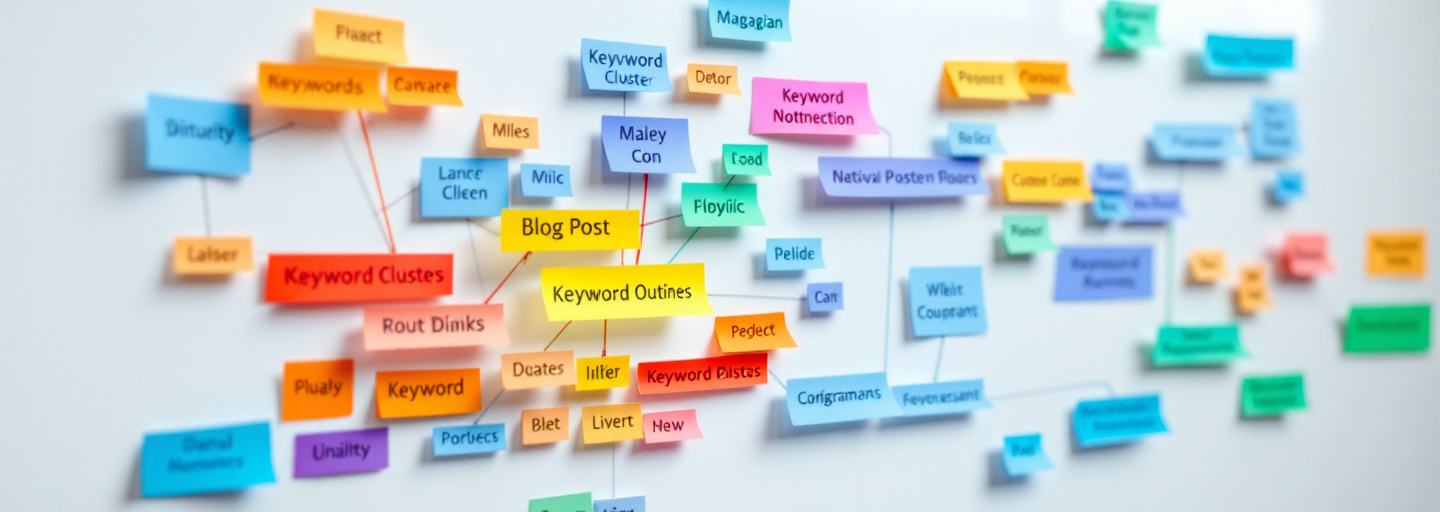
AI transforms the way we organize keywords by grouping them based on meaning and user intent rather than just lexical similarity. This semantic clustering reveals natural content structures that might not be obvious through manual analysis.
Consider how a single seed keyword like "home gardening" expands through AI analysis. Rather than producing a flat list of related terms, AI creates meaningful clusters around distinct subtopics: container gardening for apartments, seasonal planting guides, pest management solutions, and garden tool comparisons. Each cluster represents a potential content piece with its own set of semantically related keywords, creating a comprehensive content planning with AI framework that covers the topic from multiple angles.
Multi-Factor Prioritization
AI excels at weighing multiple variables simultaneously to determine which keywords deserve priority attention. While traditional methods might focus primarily on search volume, AI-powered tools consider a complex matrix of factors:
Beyond basic metrics like search volume and keyword difficulty, AI evaluates conversion potential by analyzing user intent signals and historical performance patterns. It identifies content gap opportunities by comparing your existing content against comprehensive topic models. Some systems even factor in seasonal timing, helping you prepare content before demand peaks rather than reacting to trends after they've matured.
Automated Content Mapping
The most sophisticated AI keyword research tools don't just identify and cluster keywords—they map them directly to content types and structures. This automation bridges the gap between research and execution by suggesting:
Which keyword clusters deserve standalone articles versus which should be addressed within broader guides. How keywords with different intent signals (informational, commercial, transactional) should be targeted with different content formats. Where opportunities exist to create cornerstone content that can anchor topic clusters and build topical authority.
This automated mapping capability is similar to what powers our enhanced articles feature, which uses clustering technology to create comprehensive, SEO-optimized content structures that address all relevant aspects of a topic.
| Factor | Traditional Prioritization | AI-Powered Prioritization |
|---|---|---|
| Search Volume | Primary focus, often overvalued | Balanced with other factors |
| Competition Analysis | Basic difficulty scores | Content gap analysis, ranking probability |
| User Intent | Manual assessment | NLP-based intent classification |
| Business Relevance | Subjective evaluation | Conversion potential scoring |
| Content Fit | Separate manual process | Automated content type matching |
Integrating AI Keyword Tools into Your Workflow
Essential AI Keyword Tool Functions
When selecting AI tools for how to find keywords more efficiently, focus on capabilities that deliver meaningful workflow improvements rather than just flashy features. The most valuable functions include:
Semantic search analysis that goes beyond literal matches to identify conceptually related terms. Competitive gap identification that reveals keyword opportunities your competitors have missed. Content opportunity scoring that helps prioritize keywords based on potential traffic, conversion value, and ranking difficulty. SERP feature analysis that identifies keywords likely to trigger featured snippets, knowledge panels, or other enhanced results. Topic clustering capabilities that automatically organize keywords into coherent content groups.
Connecting Research to Content Planning
Translating AI-generated keyword insights into actionable content plans requires a systematic approach. Start by analyzing keyword clusters to determine appropriate content types based on user intent signals. Informational clusters with question-based keywords typically work well as comprehensive guides, while commercial intent keywords might be better served by comparison posts or product-focused content.
Organize these content opportunities into a quarterly editorial calendar that balances high-competition cornerstone content with quicker-win long-tail opportunities. This balanced approach ensures steady traffic growth while building authority in your core topic areas. The most effective content teams dedicate 60-70% of their output to long-tail keyword opportunities while investing the remaining effort in more competitive terms that build domain authority.
Streamlining the Implementation Process
The true efficiency gains from automated SEO tools come from integrating keyword research directly into your content creation workflow. Platforms like BlogBuster eliminate the traditional handoffs between research, planning, and creation by connecting these stages in a single system.
- Input seed keywords or topics into AI research tools
- Review and refine AI-generated keyword clusters
- Prioritize clusters based on business goals and seasonality
- Map clusters to specific content pieces in your calendar
- Create content briefs that incorporate primary and secondary keywords
- Implement keywords naturally within optimized content structures
This streamlined process eliminates the friction points where keyword insights typically get diluted or lost entirely. When considering how to implement keywords effectively, it's worth reviewing our guide on why most business blogs fail, which highlights how disconnected keyword research processes contribute to poor content performance.
Best Practices for AI-Assisted Keyword Research

Human Oversight and Validation
While AI dramatically improves keyword research efficiency, human judgment remains essential for strategic alignment. AI tools excel at identifying what people are searching for, but only humans can determine which of those searches align with business objectives and brand positioning.
Review AI-generated keyword suggestions with a critical eye, asking whether each term truly matches your offerings and audience needs. A fitness equipment company might receive AI suggestions for "homemade workout equipment" based on search patterns, but this topic likely won't drive equipment sales despite its relevance to fitness. Similarly, evaluate whether suggested keywords match your brand's expertise and authority position—pursuing keywords where you can't deliver genuine value ultimately undermines your content strategy.
Balancing Data with Brand Context
Effective AI for blogging requires filtering algorithmic recommendations through your unique brand lens. Develop clear guidelines for adapting AI keyword suggestions to match your brand voice and terminology. A luxury skincare brand might modify AI-suggested keywords like "cheap anti-aging solutions" to "investment-worthy anti-aging treatments" to maintain brand positioning while still addressing the underlying search intent.
Consider how different audience segments might use varying terminology for the same concepts, and ensure your keyword strategy accommodates these differences. The most sophisticated content teams develop segment-specific keyword lists that address the same topics through different linguistic frameworks based on audience characteristics.
Continuous Refinement
AI-assisted keyword research should be an iterative process, not a one-time activity. Schedule quarterly reviews of keyword performance, analyzing which terms actually drive traffic, engagement, and conversions. Use these insights to refine your AI tool inputs and filtering criteria for future research.
Watch for warning signs that indicate over-reliance on AI without proper human oversight:
- Keywords technically match your topic but miss your audience's specific needs or pain points
- Suggested terms don't align with your brand's terminology or voice guidelines
- Recommendations ignore your business model or conversion goals
- Clusters include terms with vastly different purchase intent that should be addressed separately
When considering how AI fits into your broader SEO strategy, review our article on key differences between on-page and technical SEO to understand how keyword research connects with other optimization efforts.
Key Takeaways for Smarter Keyword Research
Implementing AI-assisted keyword research typically reduces research time by 60-70% while uncovering 2-3 times more relevant keyword opportunities. This efficiency gain allows content teams to focus on creation and strategy rather than getting bogged down in data collection and analysis.
The most significant benefits of AI-powered keyword research include comprehensive discovery of relevant terms across the full user journey, from initial awareness questions to specific purchase-intent queries. AI excels at organizing these keywords into strategic content plans that maximize topical coverage while minimizing redundant efforts. Perhaps most importantly, AI tools accelerate the implementation process from research to published content, maintaining keyword integrity throughout the content creation workflow.
The future belongs to content teams that combine AI efficiency with human strategic oversight. While automated SEO tools handle the data-intensive aspects of keyword research, human expertise remains essential for aligning these insights with brand goals and audience needs. Platforms like BlogBuster embody this balanced approach, providing powerful automation while keeping strategic control in human hands.
| Metric | Traditional Keyword Research | AI-Assisted Keyword Research | Improvement |
|---|---|---|---|
| Research Time | 8-10 hours per content piece | 2-3 hours per content piece | 60-75% reduction |
| Keyword Diversity | 15-20 related terms identified | 50-100+ semantically related terms | 3-5x more comprehensive |
| Content Planning | Manual mapping to editorial calendar | Automated clustering and content mapping | 80% faster planning process |
| Publishing Consistency | Irregular due to research bottlenecks | Consistent publishing schedule | 2-3x more content published |
| Long-Tail Opportunity | Often missed due to time constraints | Automatically identified and prioritized | 30-40% more traffic from long-tail terms |
Data based on average improvements reported by content teams after implementing AI-assisted keyword research processes. Actual results vary based on implementation quality and content volume.
For a broader perspective on how keyword research fits into the evolving content landscape, explore our article on the future of blogging and AI's role in content creation.